Finding trousers with an inseam that isn’t too short, sleeves that cover the wrists, or a jacket that doesn’t ride up above the hips: for tall people, the challenge isn’t choosing a style but finding clothes with proportions that fit their bodies.
This article compares three ways to build a well-fitting wardrobe when you’re taller than standard ready-to-wear sizing: tall ranges, alterations, and second-hand shopping.
Tall ranges, alterations, second-hand: comparing the three options
Before looking at each option in detail, this table sums up how they compare on the factors that matter in everyday wear.
| Criterion | “Tall” range | Tailoring and alterations | Second-hand |
|---|---|---|---|
| Sleeve and inseam length | Designed to fit from the outset (check the size guide) | Adjustable, but limited by the fabric allowance | Varies depending on the item you find |
| Rise | Generally higher | Difficult to alter | Check the measurements before buying |
| Shoulder width | Often proportioned accordingly | Expensive to alter on structured jackets | A top-priority screening criterion |
| Average cost per item | Comparable to standard ready-to-wear | Cost of the garment plus alterations | Lower, but takes longer to find the right item |
| In-store availability | Limited in France (mostly online) | Widely available if there’s a tailor nearby | Unpredictable; better on online platforms |
The table highlights a point that’s often overlooked: a “tall” item isn’t guaranteed to fit well unless you check the actual measurements (sleeve length, inseam, shoulder drop). Comparing these measurements with a garment that fits well is still the most reliable approach, whatever the shopping channel.
For more information, this comprehensive guide explains how to dress when you’re tall, with advice on cuts suited to body types over six feet two inches.
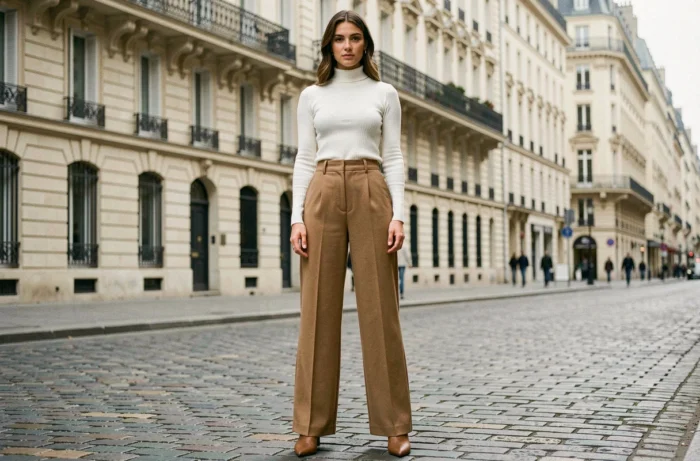
Tall cuts and standard ready-to-wear: where the real differences in proportions lie
The usual instinct is to size up for extra length. The result is predictable: the shoulders droop, there’s too much room in the chest, and the silhouette looks loose and shapeless.
“Tall” ranges solve this problem by lengthening garments without widening the frame. The difference comes down to three specific measurements:
- Sleeve length, extended by several centimeters compared with the standard cut, so the wrist is covered without pulling at the shoulder.
- Inseam, increased in proportion to leg length to avoid the “too-short trousers” effect, even when sitting.
- Torso length (shoulder-to-waist distance), adjusted so the waistband of trousers or the waist seam of a jacket falls in the right place.
Availability remains a challenge in France. Most retailers offering tall cuts operate online, with few physical stores. Trying items on before buying therefore means ordering several sizes and returning anything that doesn’t fit, which makes the process more complicated.
Take your measurements before placing an order
Measuring a garment that fits well is more useful than relying on the label. All you need is a tape measure, a pair of trousers, and a shirt that fit well. Note the sleeve length (shoulder seam to wrist), inseam (crotch seam to hem), and total torso length. You can then use these three reference measurements to compare against any brand’s size guide.
Alterations: what’s easy to adjust and what costs more
Alterations remain one of the most overlooked options for tall people. They can turn a well-made garment into a perfectly fitting piece, as long as you understand the technical limitations.
Shortening trousers or adjusting shirt sleeves are simple, inexpensive alterations. Taking in the back of a jacket or altering an inseam takes more work, but is still possible with unstructured garments (unlined jackets, cotton or linen trousers).
By contrast, widening a jacket’s shoulders or lengthening a garment beyond its fabric allowance is technically difficult and often costs more than the garment itself. A practical rule: prioritize garments that fit your shoulders and frame, then have the rest adjusted.
Alterations and textile durability
The European Ecodesign for Sustainable Products Regulation, which entered into force on 18 July 2024, sets out specific requirements for textiles, with its work plan published on 16 April 2025.
These upcoming standards will focus on the durability and repairability of clothing, not cuts or sizes. For tall people, this means the regulatory framework encourages extending the life of garments through repairs and alterations, without requiring brands to offer suitable lengths.
In France, a decree dated 29 April 2022 already requires environmental information on clothing, including where it was made and, for garments made mostly from synthetic fibers, a notice about microfibre release during washing. This information helps consumers choose durable clothing, but says nothing about fit or cut.

Second-hand clothing for tall people: what to look for and pitfalls to avoid
Shopping second-hand when you’re tall calls for a different approach than it does for the average shopper. Stock is unpredictable by nature, and size descriptions on online platforms are often imprecise.
The first thing to check is the measurement, not the size on the label. A pair of trousers labeled size 42 by one brand may have a shorter inseam than a size 40 from another. Asking the seller for the actual measurements before buying eliminates most unpleasant surprises.
The second thing to consider is the fabric. Materials with a little elastane are more forgiving if the length or width is slightly off. Stiff cotton or heavy wool garments, on the other hand, need to fit properly from the outset or be altered.
Combining second-hand shopping with alterations is probably the best value-for-money way to build a well-fitting wardrobe. A well-made jacket bought at a reduced price and altered by a tailor often costs less than a new tall-style model, while offering better-quality fabric.
The goal for tall people isn’t to correct their silhouette, but to find clothes designed or adjusted for their actual proportions. Compare your measurements with size guides, prioritize adjustable garments, and make alterations a regular part of your approach rather than a last resort: these three habits can transform your shopping experience for good.