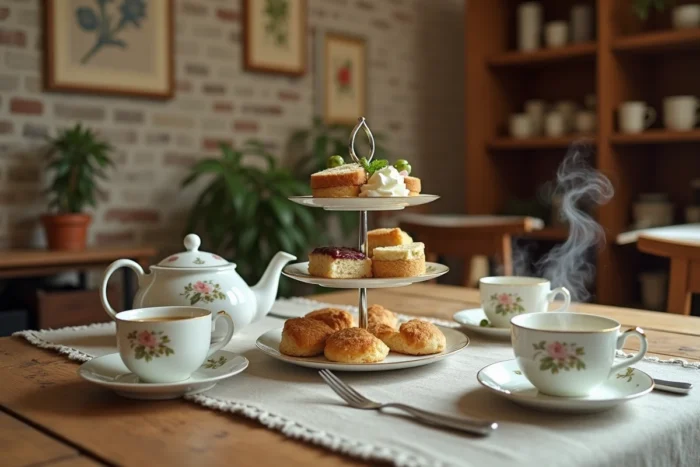
When trying to recreate a British pantry from France, the first instinct is often to bring back a few packets of tea from a trip to London. The problem is that most interesting varieties are not found in airports or tourist supermarkets. Single estate teas, bitter citrus marmalades, malt condiments, shortbread biscuits: British grocery has its codes, and understanding them changes how you fill your basket.
British Teas: Beyond the Standard Bag
English tea is often associated with a pyramid bag steeped in a mug with a splash of milk. This image is true for everyday life, but it masks a diversity of grades and blends that deserves attention.
The house blend is the signature of each brand. An English Breakfast from Fortnum and Mason does not resemble that of a supermarket brand: the ratio of Assam, Ceylon, and Kenyan changes the mouthfeel and the resistance to long steeping. For breakfast, a strong blend that holds up against milk is preferred. For the afternoon, a Darjeeling or an Earl Grey flavored with bergamot works better on its own.
Individual paper filter bags release fewer aromas than loose tea or muslin bags. If ordering online, it’s better to aim for loose tea packaged under protective atmosphere, or at least wide bags that allow the leaves to expand. You can explore a wide selection of items at https://www.britishandco.com/, which brings together teas, biscuits, and British grocery products delivered in France.
English Marmalades and Jams: Tiptree and Others
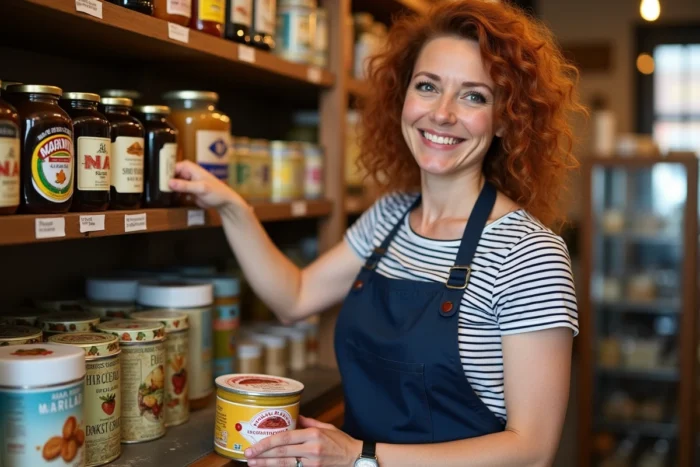
Bitter orange marmalade is the most underrated British product in France. It is often confused with ordinary citrus jam, while its texture, bitterness, and peel content are entirely different.
Tiptree (Wilkin and Sons) is the most widely distributed reference. Their “Orange Marmalade” uses Seville oranges, harvested during a few weeks in winter. It is this seasonality that gives it its characteristic taste: bitter, slightly caramelized, with visible pieces of peel.
Criteria for Choosing a Good British Marmalade
- The mention of “Seville oranges” or “bitter oranges” on the label guarantees the use of bitter citrus, not standard sweet oranges
- The “thick cut” texture contains large slices of peel, ideal on toasted bread, while “fine cut” is better suited for pastries or scones
- A high fruit content (above the average of French jams) distinguishes artisan brands from entry-level products
Beyond marmalade, British jams explore less common combinations: strawberry and champagne, rhubarb and ginger, blackberry and apple. These blends work particularly well with warm scones, accompanied by clotted cream.
Sauces, Condiments, and Savory Products to Know
The British savory grocery relies on a few pillars that online competitors rarely list accurately. We think of fish and chips or breakfast, but the true markers of everyday cooking are the condiments.
HP Sauce (brown, vinegary, slightly sweet) accompanies morning sausages, bacon sandwiches, and just about anything off the grill. Worcestershire sauce, more complex (fermented anchovies, tamarind, malt vinegar), is used both in cooking and as a table seasoning. These two products are difficult to replace with French equivalents.
British Cheeses and Charcuterie
Stilton, aged Cheddar (not industrial orange cheddar), and Red Leicester make up a credible British cheese board. The mature Cheddar, aged for several months, develops a crystalline texture and a sharp taste that surprises those who only know the melted version from burgers.
On the charcuterie side, Cumberland sausages (spicy, spiral-wrapped) and herb pork sausages are the most sought after. Their texture differs from French sausages: more bread crumb in the composition, which gives a particular tenderness when cooked.
Biscuits and Sweet Treats: What’s Worth Trying
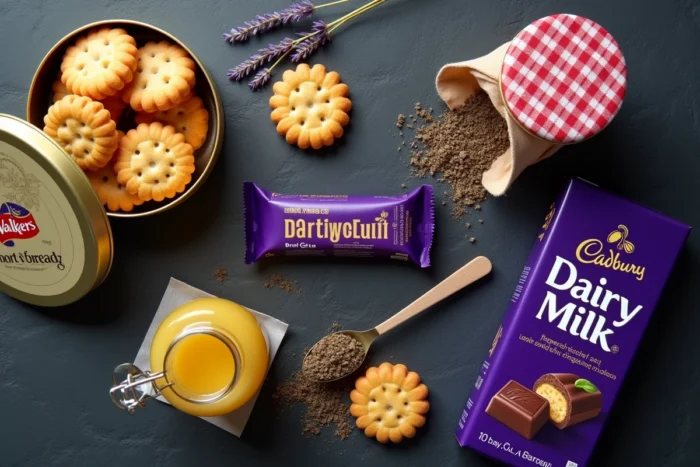
The biscuit aisle is probably where British grocery offers the most variety. Scottish pure butter shortbreads are the most famous, but the range goes well beyond.
- Digestive biscuits (plain or coated in milk chocolate) are the quintessential tea biscuit, with a crumbly texture and a hint of salt
- Flapjacks, bars made from oats, golden syrup, and butter, are more like pastry than dry biscuits
- Jaffa Cakes (sponge, orange jelly, dark chocolate coating) divide the British themselves on their status: biscuit or cake
- Lemon curd, a dense and tangy lemon cream, is spread on toast or used to fill tart shells
One point on which feedback varies: the preservation of artisanal shortbreads during import. Some lose their crispness after a few weeks if the packaging is not airtight. Opting for metal tins or packaging under modified atmosphere remains the best precaution.
Scottish whisky could warrant an entire article, but in a grocery context, miniatures and tasting sets are a good entry point to discover the differences between a fruity Speyside and a peaty Islay, without investing in a full bottle.
Building a true British pantry ultimately means accepting that each product has a specific use: marmalade on the morning toast, HP Sauce on bacon, the digestive dunked in afternoon tea. It is this anchoring in daily rituals that gives these products their particular flavor, far from mere exotic curiosity.