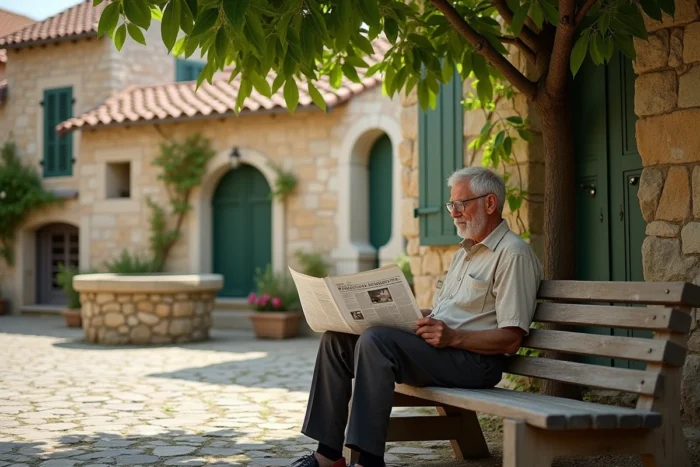
Beynat is a commune in Corrèze located between Brive-la-Gaillarde, Tulle, and Argentat, at the crossroads of three living areas. The surrounding communes share the same intercommunal territory structured around shared services, landscapes shaped by the Dordogne Valley, and an economic fabric undergoing reconstruction thanks to rural revitalization initiatives.
France Ruralities Zones: What Changes for the Communes Around Beynat
The classification of several Corrèze communes as France Ruralities Revitalization zone (ZFRR) significantly alters their economic attractiveness. This initiative targets fragile rural territories and opens two distinct fiscal levers.
The first is a total exemption from employer contributions for twelve months for employees earning up to 1.5 times the minimum wage. The second concerns corporate tax: businesses created or taken over in ZFRR between July 1, 2024, and December 31, 2029, benefit from an exemption. For ZFRR+ (the most vulnerable territories), the window runs from January 1, 2025, to December 31, 2029.
For a craftsman considering taking over a business in Beynat, Albignac, or Sérilhac, these exemptions reduce the financial risk of the initial years. They also promote the maintenance of liberal and agricultural activities, two pillars of the local economy. Practical information about intercommunal cooperation and its member communes is gathered on cc-beynat.fr, which details the skills and projects undertaken collectively.
Geography and Living Environment of the Corrèze Communes Near Beynat
Understanding the geographical organization of the territory helps to grasp why each commune retains its own identity while sharing infrastructure.
A Relief Between Plateaus and Valleys
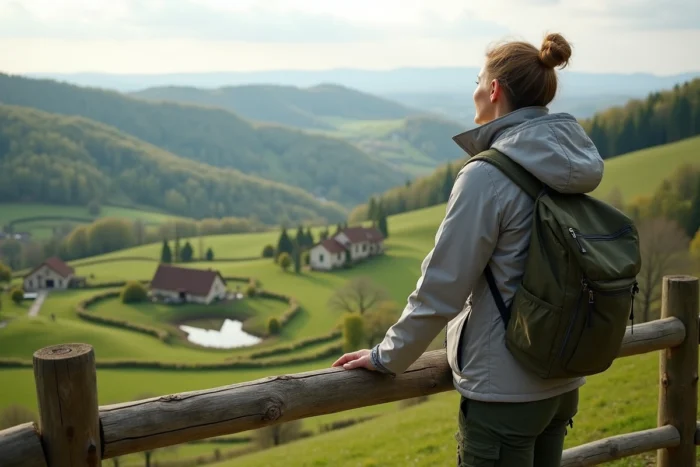
The territory rises between the granitic plateau of Bas-Limousin and the gorges of the Dordogne. This topography creates microclimates: valley bottoms remain milder in winter, while the heights offer unobstructed views of the Massif Central. The diversity of soils explains the coexistence of grazing meadows, hazelnut groves, and chestnut woodlands.
Aubazine, Meyssac, Collonges-la-Rouge: Complementary Neighbors
Aubazine is distinguished by its Canal des Moines and its Cistercian abbey, a few kilometers to the north. Meyssac, built of red sandstone, hosts a weekly market that attracts producers from the entire canton. Collonges-la-Rouge, classified among the Most Beautiful Villages of France, draws a tourist flow that benefits accommodations spread across the surrounding communes.
Beynat occupies a central position between these hubs. Lake Miel, located in the commune, offers supervised swimming and water activities in season, making it a convenient base for exploring the Dordogne Valley or the Vézère gorges.
Services and Daily Life in the Beynat Intercommunal Area
The appeal of a rural territory is not measured solely by its heritage. The presence of everyday services determines a commune’s ability to retain residents year-round.
- The Sunday market in Beynat and the night market of local producers (Tuesday evenings in July-August) ensure a supply of short supply chains.
- The communes in the basin share educational, sports, and cultural facilities at the intercommunal level.
- The France Ruralities plan, which now includes 41 concrete measures evaluated over three years, finances mobility actions, maintenance of public services, and support for associative life in these territories.
- Access to healthcare remains a challenge: organizations like Médecins Solidaires operate in under-served areas to address the lack of practitioners.
These elements outline a living environment that is not limited to summer tourism. Intercommunal cooperation compensates for the small size of the communes by providing access to technical skills (sanitation, roads, urban planning) that they could not finance alone.

Outdoor Activities and Heritage in Corrèze Around Beynat
The territory lends itself to various outdoor practices, supported by a network of marked trails and classified waterways.
Hiking and Itinerancy
Several hiking loops start directly from Beynat or nearby communes. The paths traverse landscapes alternating between hedgerow meadows, chestnut forests, and stone hamlets. The GR 480 connects the main heritage sites of the Dordogne Valley over several days.
Fishing and Aquatic Environments
Lake Miel and the streams feeding into the Dordogne offer fishing routes in the first and second categories. Corrèze fishing federations regularly conduct fish inventories through electric fishing to monitor the quality of the environments. This monitoring reflects a monitored ecological state, which also benefits nature enthusiasts who do not fish.
Built Heritage and Local Markets
Beyond the classified villages, vernacular heritage (slate barns, bread ovens, wayside crosses) punctuates the routes between the communes. Seasonal markets allow for the discovery of local production: Limousin veal, walnuts, farm cheeses, honey (the toponymy of the lake is not a coincidence).
Settling Permanently Near Beynat: Concrete Constraints and Advantages
Land remains accessible compared to regional metropolitan areas. The proximity to Brive-la-Gaillarde, connected by highway and train, allows for daily commutes for those working in the city while residing in a rural environment.
The ZFRR exemptions mentioned earlier facilitate the creation of businesses. Digital coverage is improving thanks to the department’s investments in fiber optics, a prerequisite for teleworking that attracts new profiles to these communes.
The local real estate market shows prices significantly lower than the national average, whether for rental or purchase. This financial accessibility, coupled with installation aids in rural areas, explains the renewed interest in communes like Beynat, Sérilhac, or Lanteuil, where the quality of life compensates for the distance from major urban centers.