
You slip under the duvet, turn off the light, and a dark shape darts across the pillow. The instinct is often to jump or crush the intruder. Both reactions worsen the situation: the first robs you of sleep, the second leaves remnants stuck to the fabric without solving the problem. When faced with a spider in bed at night, a few simple actions are enough to regain control.
Spider bite or bed bug: the diagnosis no one makes upon waking
You discover a red mark upon waking and immediately think of the spider you saw the night before. This shortcut is misleading. The vast majority of nighttime lesions do not come from a spider.
A spider bite generally produces two small close-set dots on the skin, corresponding to the chelicerae. The area is localized, slightly swollen, and the pain remains moderate. This type of mark does not itch much in the hours that follow.
Bed bug bites, on the other hand, present differently. They often form a line or a group of three to five welts on exposed areas during sleep (arms, shoulders, neck). The itching is pronounced and can last several days. To distinguish, you need to examine the bedding for concrete clues:
- Small black spots (droppings) on the seams of the mattress or box spring
- Dry blood stains on the sheet, left by the accidental crushing of a engorged insect
- Translucent skins or tiny reddish-brown insects lodged in the corners of the bed frame
If these signs appear, the problem is not the spider. Black spots and skins on the mattress point to bed bugs, not a passing arachnid. A detailed article on the presence of a spider in bed also explains why this confusion is common in France.
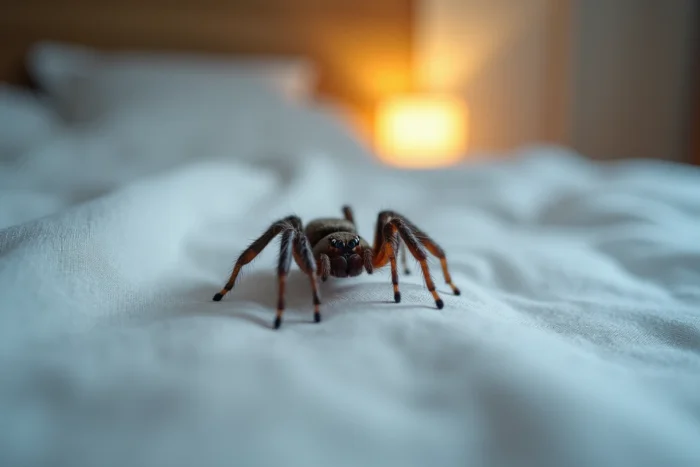
Spider in the bedroom at night: capture without crushing
The spider has no reason to bite you. It does not hunt humans. It ended up in your bed by chance, looking for an insect or a dark corner. Your body heat and movements disturb it more than they attract it.
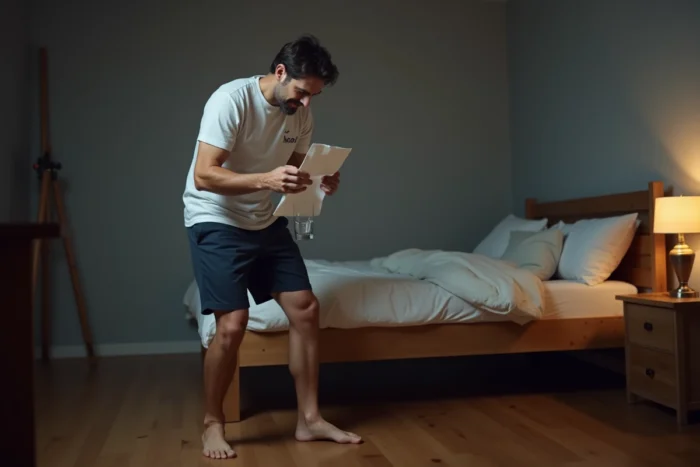
The most effective action is to capture it with a glass and a stiff piece of paper. Place a glass or transparent jar over the spider, slide a postcard or a piece of cardboard between the container and the fabric, then turn it all over. Release the spider outside, a few meters from the bedroom window.
Crushing the spider poses two concrete problems. The first is that the remains attract other small predators drawn to organic matter. The second is psychological: you have no visual confirmation that the spider has been removed, which fuels anxiety when it’s time to go back to bed.
Secure the bedding before going back to sleep
Once the spider is removed, shake the duvet and sheets by lifting them completely out of the bed. Check the pillow (top and bottom) and run your hand over the fitted sheet to spot any other presence. This check takes less than two minutes and is enough to lift any doubt.
Shaking all the bedding after removal eliminates residual stress and allows you to fall back asleep without keeping one eye open.
When to see a doctor after a spider bite
In France, the most common house spiders (Tegenaria, Pholcus, Araneus) pose no medical danger. Their chelicerae are often too weak to pierce the skin, or their venom has no notable effect on the human body.
The protocol in case of a suspected bite remains simple. Wash the area with soap and water, apply cold for a few minutes, and avoid scratching. Photographing the lesion on the same day allows you to track its evolution if it changes appearance.
Have you ever noticed that a small redness can evolve in a few hours? This is precisely why the reference photo is useful. If the area spreads, becomes warm, or is accompanied by fever or nausea, consult a doctor. These symptoms may indicate a secondary bacterial superinfection, not necessarily a dangerous venom.
The particular case of the black widow and the brown recluse
These two species concentrate concerns, but their presence in French homes remains very localized. The black widow (Latrodectus tredecimguttatus) primarily lives in the south of France, outdoors. The brown recluse (Loxosceles rufescens) is even rarer in households.
If a bite causes intense and increasing pain within the hour, along with cramps or chills, call 15 or go to the emergency room. These cases remain exceptional.
Reduce spiders in the bedroom without chemicals
Rather than treating the symptom (the spider on the pillow), it’s better to act on what attracts it. Spiders come into a room because they find prey there: gnats, mosquitoes, flying mites.
- Vacuuming the corners of the ceiling, behind the headboard, and under the box spring once a week removes webs and eggs
- Reducing outdoor lighting near the bedroom windows limits the influx of nocturnal flying insects that make up the spider’s pantry
- Sealing gaps around windows, baseboards, and pipe passages eliminates main access routes
A regular cleaning of the corners is enough to lower the spider population in a bedroom within a few weeks. Fewer prey in the room means fewer spiders settled.
Natural repellents made from horse chestnuts or peppermint oil circulate widely online. Their effectiveness has not been reliably demonstrated. It’s better to rely on mechanical cleaning, which yields visible and verifiable results.
The next time a spider crosses your sheet, the right reflex comes down to three steps: a glass, a piece of paper, and a quick check of the bedding. If welts appear regularly upon waking despite the absence of a visible spider, inspect the seams of the mattress to rule out bed bugs before looking for another culprit.