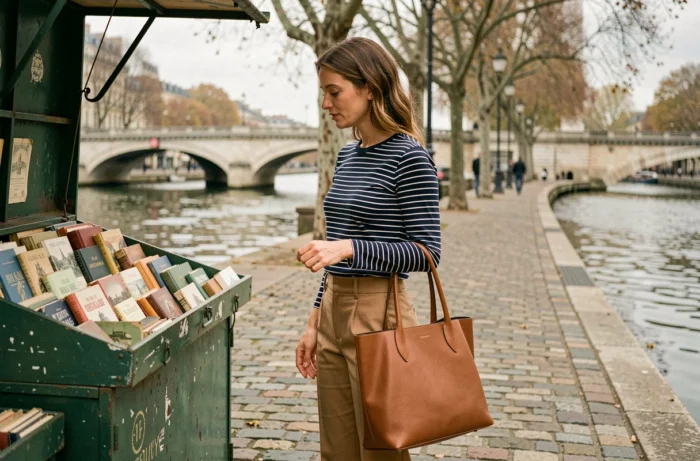
The French style is not just a checklist of clothes to tick off. It is based on a particular relationship with clothing: few pieces, worn for a long time, chosen for their cut rather than their logo. This approach, often described as timeless chic, finds today a reinforced echo in French legislation against fast fashion.
Tax on ephemeral fashion: what the law changes for your wardrobe
Since September 1, 2026, France has implemented a financial penalty on ultra-ephemeral fashion products. This measure, presented as the first of its kind in the world targeting this economic model, imposes a surcharge of up to 50% of the pre-tax price, with a cap of 12 euros per item in 2026 and then 19.50 euros in 2030.
In practical terms, a t-shirt sold for a few euros by a fast fashion brand will cost significantly more. The message is clear: lawmakers are pushing consumers towards durable and repairable pieces.
Starting January 1, 2027, advertising for these products will also be restricted, including through influencer marketing. Massive campaigns on social media, which fueled impulsive buying cycles, will lose their main lever.
This regulatory framework gives a concrete advantage to wardrobes designed for the long term, those that the French style has valued for decades. To explore this art of dressing sustainably, a useful resource: https://alafrancaisetoujourschic.fr/ which details the principles of this daily elegance.
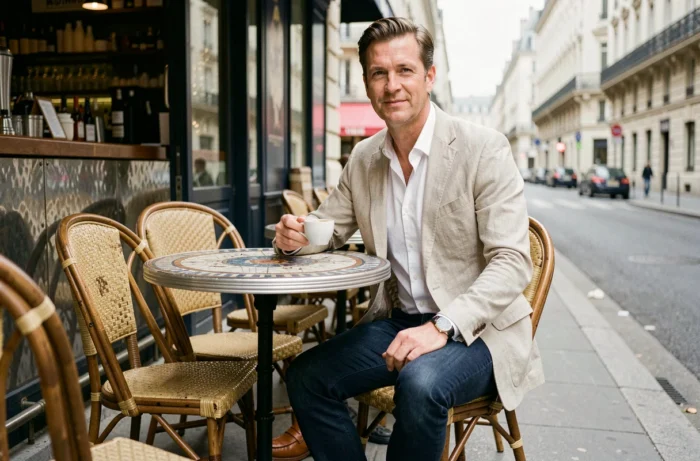
Choose a fabric before choosing a color
Have you ever noticed that a cheap sweater loses its shape after three washes? The difference lies not in the brand, but in the material. French style gives clear priority to the feel and durability of the fabric.
A wool blazer with a sufficiently dense weight retains its structure for years. A thick cotton blouse irons better and falls straighter than a synthetic equivalent. The quality of the fabric determines the longevity of the silhouette.
Concrete benchmarks for evaluating a material
- Pinch the fabric between two fingers: if it returns to its original shape without a mark, the fiber is of good quality. A persistent crease indicates a fragile weave.
- Turn the garment inside out: regular seams, wide seam allowances, and clean finishes indicate careful assembly that will withstand washing.
- Check the composition on the label: a high percentage of natural fibers (cotton, linen, wool) generally ensures better aging than a predominantly synthetic blend.
This verification reflex takes a few seconds in the fitting room. It avoids disappointing purchases and gradually builds a coherent wardrobe.
French wardrobe: the logic of combinable pieces
The basic principle is simple: each garment should be able to be worn with at least three other pieces from the wardrobe. If a dress only works with one pair of shoes and one bag, it clutters more than it serves.
Let’s take an example. A straight navy wool pant can be worn with an ecru turtleneck in autumn, a white blouse in summer, and a double-breasted blazer for a professional meeting. Three distinct outfits from one key piece.
Build by blocks rather than by whims
A common mistake is to buy a piece just because it looks good on its own. French style works the opposite way: you start with what you already own, identify the gaps, and then add a garment that completes the whole.
Five well-chosen basics generate more outfits than fifteen randomly purchased pieces. A structured blazer, a raw denim jean, a straight dress, a fine knit sweater, and a trench coat form a solid foundation. Each subsequent addition (a scarf, a pair of ankle boots, a pleated skirt) multiplies combinations without cluttering the wardrobe.
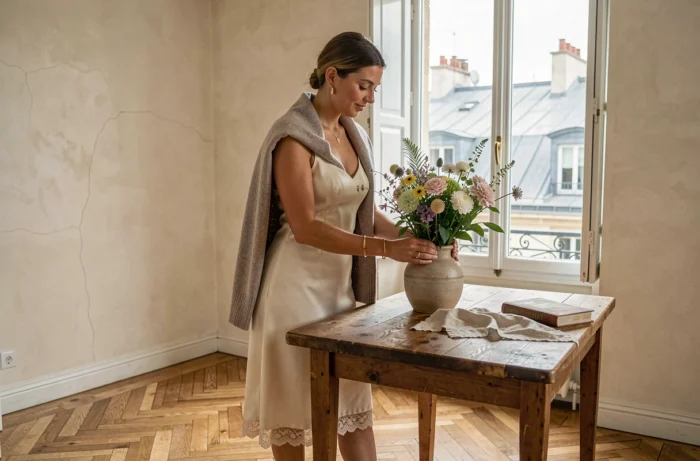
Everyday elegance: the role of fit and maintenance
An oversized garment ages its wearer. A garment that is too tight constrains them. French chic relies on precise fit, neither tight nor loose. Why does this detail matter so much? Because the cut creates the silhouette before the color or pattern is perceived.
Having pants altered or adjusting the shoulders of a blazer costs little compared to the price of the garment. This gesture, commonplace in France, transforms a ready-to-wear piece into a garment that looks made to measure.
Maintain for longevity
French elegance includes a careful approach to maintenance. Washing at low temperatures, drying knits flat, using hangers suited to each type of garment: these habits extend the lifespan of pieces by several years.
Repairing a snag rather than replacing a garment fits into this same logic. Stopping, dyeing, or simply replacing a button gives a second life to pieces that are cherished. The French law on ephemeral fashion also encourages this reflex by valuing brands that facilitate repairs.
The French style does not require an unlimited budget or a huge wardrobe. It requires patience in choosing, attention to material, and true coherence between pieces. Fewer clothes, better chosen, worn longer: this formula withstands trends because it does not depend on any of them.