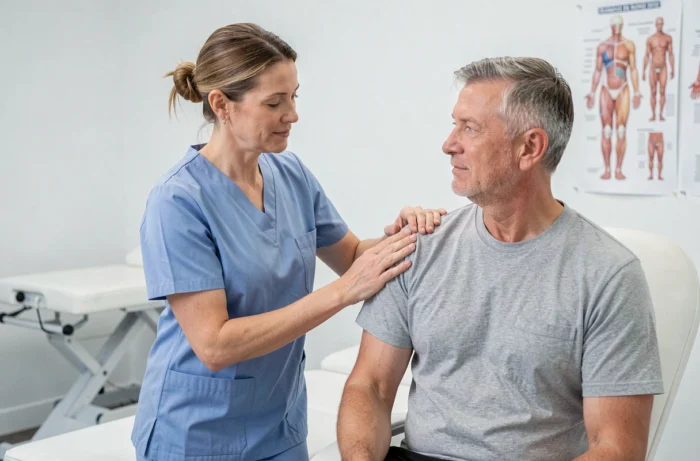
Physiotherapy refers to the set of rehabilitation techniques that use movement, physical agents (heat, cold, electricity, ultrasound), and manual therapy to restore or maintain a patient’s functional abilities. In France, this discipline largely overlaps with kinesitherapy and is undergoing rapid changes driven by both regulatory developments and the integration of new digital tools in practices.
Blood pressure measurement by the physiotherapist: an expanded skill
Among the recent changes that have received less attention is the expansion of the physiotherapist’s skills in prevention. Until recently, blood pressure measurement by a physiotherapist was only permitted within the strict framework of a prescribed treatment during a rehabilitation session.
Blood pressure measurement becomes an autonomous preventive act of the physiotherapist, with an explicit exception to the general prohibition on practicing medicine for this specific act. This evolution paves the way for cardiovascular prevention pathways that systematically integrate the physiotherapist, beyond just postoperative or traumatic rehabilitation.
In practice, a physiotherapist can now measure a patient’s blood pressure during a follow-up consultation without this act being linked to a dedicated medical prescription. On the Physio Mag website, professionals can find a regularly updated overview of these developments that redefine the scope of the profession.
Telehealth in kinesitherapy: regulatory constraints that articles overlook
Remote rehabilitation has generated a lot of discussion, often from the perspective of technological possibilities. Secure videoconferencing platforms, exercise tracking applications, and connected sensors make home monitoring technically viable. However, the regulatory framework imposes concrete limits that are rarely detailed.
The initial diagnostic assessment cannot be conducted via telehealth. The first contact between the physiotherapist and their patient must remain physical to allow for clinical examination, palpation tests, and the development of a reliable treatment plan. This constraint effectively excludes any fully dematerialized care.
The proportion of sessions that can be conducted remotely is also regulated. The legislator’s goal is to prevent a drift towards exclusively digital monitoring that would sacrifice the quality of manual care. For practices considering integrating telehealth, the question is therefore not only technical (which tool to choose, how to secure patient data), but primarily organizational: how many remote sessions for how many in-person sessions.
When telehealth provides real added value
Telehealth is particularly valuable in specific situations:
- Patients with reduced mobility or those geographically distant from their practice, for whom each trip represents a significant effort or transport cost
- Maintenance phases at the end of the rehabilitation process, when the patient masters their exercises and the physiotherapist supervises execution and adjusts loads remotely
- Light postoperative follow-up (upper limbs, gentle functional rehabilitation), where video observation is sufficient to correct posture and movement
Conversely, any pathology requiring manual manipulation, passive mobilization, or proprioceptive work on an unstable platform remains incompatible with distance.
Direct access in physiotherapy: towards reduced wait times for care
A fundamental movement is sweeping through the profession in several countries: direct access to physiotherapy without prior medical prescription. The aim is to reduce the time between the onset of symptoms and the start of rehabilitation, particularly for common musculoskeletal disorders (low back pain, tendinopathy, sprains).
In France, this issue remains debated. The physiotherapist has the diagnostic skills to identify pathologies within their field of intervention, but the current care pathway generally requires a visit to the general practitioner. Each additional week of delay before starting rehabilitation can prolong the total recovery time, which impacts both the patient and the healthcare system.
Other French-speaking or European countries have already taken the plunge, with documented results on reduced waiting times. Direct access does not mean the absence of coordination with the doctor: the physiotherapist refers to a medical consultation as soon as they identify warning signs (red flags) outside their scope.
Motion sensors and real-time data: what it changes in practice
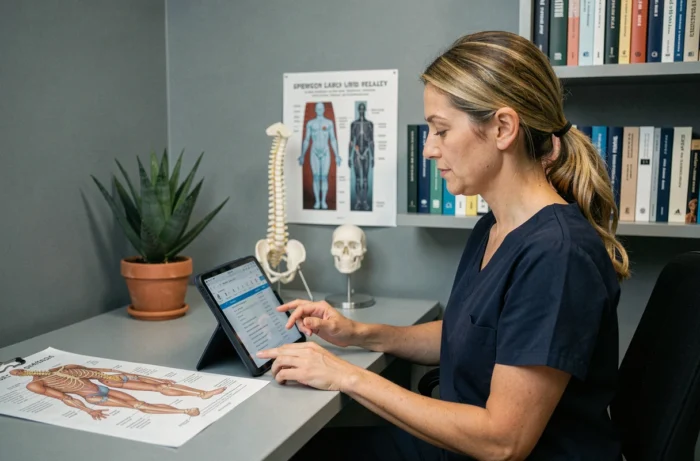
The integration of wireless sensors in physiotherapy practices changes the way professionals assess and monitor their patients. Compact devices, attached to a limb or joint, measure joint range, muscle strength, or weight-bearing symmetry in real time.
The main benefit is not the raw measurement accuracy (a goniometer remains reliable for range), but the ability to objectively track the patient’s progress from one session to the next. When a patient sees on a screen that their knee flexion range has increased by several degrees in three weeks, their motivation increases. And patient motivation is a determining factor in rehabilitation outcomes.
Current limitations of data collection
The proliferation of measurement tools raises practical questions:
- The time required for calibration and installation of sensors can cut several minutes from a session, which impacts an already busy schedule
- The collected data requires reliable interpretation software, and not all devices communicate with each other
- Health data protection requires certified hosting and explicit patient consent, with complete traceability of access
A practice investing in these technologies must therefore anticipate not only the cost of equipment but also staff training and regulatory compliance of data flows.
Physiotherapy is transforming less through a spectacular upheaval than through an accumulation of concrete modifications: a preventive act authorized here, a telehealth constraint clarified there, a sensor that makes visible what the therapist previously perceived only through touch. These adjustments, taken separately, may seem modest. Put together, they redefine the daily life of the practitioner and the quality of patient care.