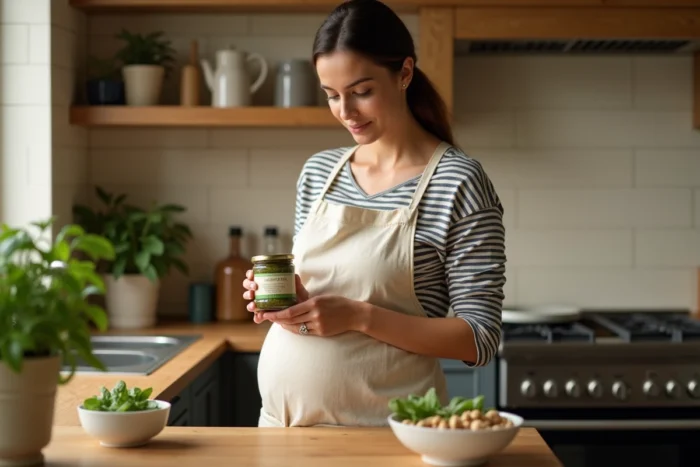
You open the fridge, the jar of pesto is there, and the question arises: can you put it in your pasta tonight without risk to the baby? The answer mainly depends on the type of pesto you have on hand. Industrial jarred pesto and fresh pesto from the deli do not present the same risk profile during pregnancy at all.
Industrial pesto or fresh pesto: the risk is not the same
We tend to put all pestos in the same basket. This is a mistake. An industrial jarred pesto, pasteurized and sealed, has a risk profile comparable to ready-to-use sauces sold in supermarkets. As long as the cold chain is respected and the jar is consumed quickly after opening, the risk of contamination by Listeria remains very low.
The problem comes from fresh artisanal pesto, the kind you find at the deli counter or in an open tray in the refrigerated section. This type of product is handled, stored in a refrigerated display, and often prepared with bulk grated cheese. Current recommendations on listeriosis during pregnancy emphasize the increased risk of cross-contamination for products sold by weight or prepared in bulk, as opposed to vacuum-packed or jarred products.
Specifically, if you are pregnant and want to eat pesto, a detailed article discusses the precautions related to the consumption of pesto and pregnancy on 75cl by distinguishing between different scenarios. The distinction between industrial/artisanal is the first reflex to have.
Basil, parmesan, pine nuts: the ingredients of pesto to watch during pregnancy
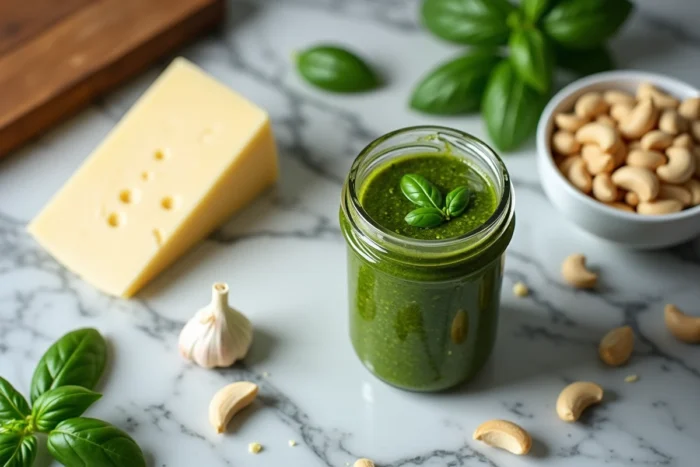
Classic pesto (alla genovese) contains fresh basil, olive oil, pine nuts, garlic, and parmesan. Each of these ingredients deserves a look when you are pregnant.
Basil and toxoplasmosis
Fresh basil, like any raw vegetable, can carry the Toxoplasma gondii parasite. The risk concerns pregnant women who are not immune to toxoplasmosis. The rule is the same as for a salad or aromatic herbs: wash the basil thoroughly under running water before use. If you are preparing your homemade pesto, this step significantly reduces exposure.
For industrial pesto, the basil has been washed and processed in a controlled manner. The risk of toxoplasmosis is considered negligible.
Parmesan and the question of raw milk
Parmesan (Parmigiano Reggiano) is a cooked pressed cheese, aged for a long time. French recommendations generally allow cooked pressed cheeses during pregnancy, as the manufacturing process and aging duration make the survival of Listeria very unlikely. Parmesan in pesto does not pose the same problem as raw milk camembert.
Opinions vary on this point when it comes to grated parmesan sold in bulk or in an open packet: grated cheese in a packet can concentrate moisture and promote bacterial growth. Prefer parmesan that you grate yourself or parmesan that is directly incorporated into the industrial recipe.
Pine nuts
Pine nuts do not pose any specific health issues during pregnancy. They provide interesting fatty acids and minerals. No particular restrictions apply to their consumption for pregnant women.
Preparing or consuming pesto while pregnant: practical steps
Rather than giving up pesto for nine months, you can adapt your habits with a few simple precautions. Here are the points to check:
- Choose a pasteurized jarred pesto and check that the jar has not been opened for more than two to three days in the refrigerator.
- If you prepare homemade pesto, wash the basil leaf by leaf under running water and use parmesan that you grate yourself just before.
- Avoid fresh pesto bought at the deli counter, in an open tray, or in bulk, where cross-contamination by utensils or other foods is more likely.
- Cook the pesto with the pasta for a few minutes in the pan: heat significantly reduces any potential bacterial load, even if it slightly alters the flavor.
Pesto rosso, walnut pesto: do the variations change the game?
Pesto alla genovese is not the only one on the market. Pesto rosso (made with sun-dried tomatoes), walnut pesto, or cheese-free pesto are common. The precautionary logic remains the same: it is the method of production and preservation that determines the risk, not the recipe itself.
An industrial jarred pesto rosso does not pose more of a problem than an industrial green pesto. However, a walnut pesto prepared in-store and kept in an open refrigerated display has the same limitations as any fresh product sold by weight.
The only additional point of caution concerns variations containing soft cheeses (ricotta, gorgonzola). These cheeses are on the list of foods discouraged during pregnancy due to the risk of listeriosis. Check the ingredient list if you opt for an atypical pesto.
When to consult in case of doubt after eating pesto while pregnant
If you have consumed fresh artisanal pesto and experience fever, unusual aches, digestive issues, or headaches in the days that follow, contact your doctor or midwife. These symptoms may suggest listeriosis, which has an incubation period that can extend over several weeks.
In the absence of symptoms, occasional consumption of pesto (even fresh) does not warrant panic. Listeriosis remains a rare infection. The goal of food precautions during pregnancy is to limit repeated exposure, not to eliminate all theoretical risk after a single meal.
The most reliable reflex remains to favor pasteurized products in sealed jars and reserve homemade pesto for preparations where the basil has been properly washed. With these few adjustments, pesto retains its place in the diet of a pregnant woman.