The autumn-winter 2026 fashion trends can be read as much in the collections as in the regulatory texts. Between the ban on the destruction of unsold textiles that came into effect on July 19, 2026, in the EU and the arrival of the digital product passport, the season reshapes the rules of the game for brands as well as for informed consumers.
Digital product passport and textile traceability: what changes in the fall of 2026
The digital product passport for textiles entered its infrastructure phase in July 2026. This European initiative ultimately requires a unique identifier for each item, linked to a database tracking the origin of fibers, manufacturing steps, and end-of-life conditions.
We are already observing its effects on sourcing. Brands that operate in long supply chains (multi-country outsourcing, outsourced dyeing) must map their supply chains well before mandatory compliance. The autumn 2026 collections reflect this constraint in their material choices, with a tightening of referenced suppliers.
Another deadline to watch: on September 27, 2026, unproven generic environmental claims will become prohibited in the EU. Terms like “eco-friendly,” “green,” or “conscious” without documented proof will disappear from labels and product sheets. This tightening pushes brands to reformulate their communication, and the fashion briefs relayed by Fashion Boobies fashion briefs already reflect this shift towards more technical and verifiable vocabulary.
Ban on destruction of unsold goods: consequences for collections

Since July 19, 2026, large companies operating in the EU can no longer destroy their unsold textiles. Reuse, repair, donation, or recycling become the only legal options. This measure, confirmed by Reuters, structurally transforms stock management.
Brands are voluntarily reducing the depth of their ranges. Producing fewer references per season limits the risk of overstock. We are seeing a convergence: the autumn-winter 2026 collections feature more streamlined wardrobes, with pieces designed to last multiple seasons rather than to respond to a micro-cycle.
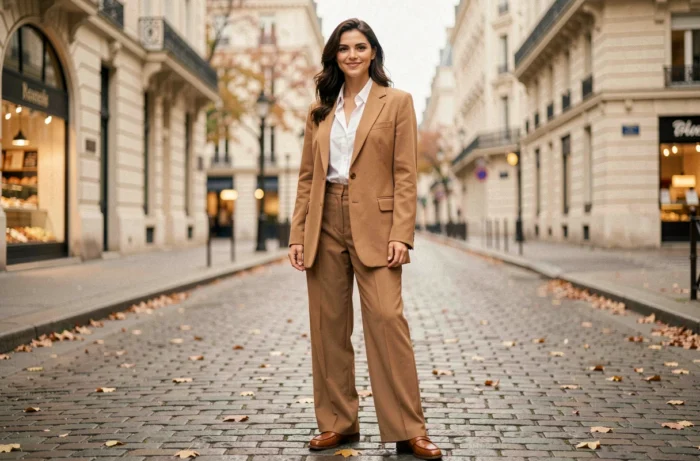
Simple tailoring is making a strong comeback in this context. A structured wool-blend jacket, straight trousers with a permanent crease, a straight crepe dress: these pieces transcend seasons without stylistic devaluation. Their residual value remains high, facilitating reuse or resale in case of overstock.
- Donating unsold clothing to charities becomes a full-fledged logistical flow, with documented traceability requirements
- Fast fashion brands are investing in mechanical recycling channels to absorb volumes of synthetic fibers
- Luxury brands prioritize zero destruction by reducing series and developing made-to-measure or pre-order options
Autumn 2026 silhouettes: tailoring, volumes, and the return of leather
Structured tailoring dominates the offerings for the season. Shoulders are sharp without being exaggerated, waists are defined, and lengths are at or below the knee. This sober clothing vocabulary responds to a demand for durability of use as much as to an aesthetic choice.

Leather returns as the signature material of the season. Short jackets, midi skirts, structured bags: matte finishes and deep shades of cognac, chocolate, or black dominate. Plant-based leather alternatives are gaining ground, driven by new transparency obligations regarding material composition.
On the footwear side, high block-heeled boots and chunky loafers capture attention. The look is built from the bottom up, with thick soles anchoring the silhouette. Jewelry remains discreet: fine chains, architectural earrings, rigid bracelets in gold metal.
Colors and prints to note
The autumn 2026 palette is organized around earthy tones (caramel, tobacco, terracotta) and deep neutrals (burgundy, pine green, anthracite gray). Burgundy emerges as the standout color of the season, ranging from total looks to simple accessories.
Prints are measured. Tartan returns in discreet versions, pinstripes dress women’s suits, and floral patterns are rare, reserved for evening dresses or scarves. The retro trend draws from the archives of the 1970s, with flared cuts and wide collars that evoke that era without caricaturing it.
Extended producer responsibility: the hidden cost of fall clothing
Regulatory pressure is shifting from consumers to brands. The extended producer responsibility (EPR) for textiles frameworks are strengthening in several European countries. Brands will need to finance more of the collection, sorting, and end-of-life processes for the textiles they bring to market.
This additional cost is already reflected in the prices of certain ranges. Accessible collections are seeing their margins compressed, while the premium segment absorbs the burden more easily. For the informed consumer, this means that the value for money of a well-constructed piece improves relatively: investing in a durable garment becomes more rational when the environmental cost is factored into the price.
- Labels will need to mention the duration of the legal warranty, enhancing readability for the buyer
- Resale and second-hand platforms directly benefit from these regulations, with an influx of archive pieces in good condition
- Brands that master their production chain from start to finish gain a measurable competitive advantage
The fashion of this fall 2026 is characterized by a convergence between regulatory demands and stylistic choices. The most compelling collections are those that transform normative constraints into creative choices, with streamlined wardrobes, traceable materials, and silhouettes designed to last beyond a single season.