
Wishing a colleague a good vacation before their time off is a simple gesture, but the choice of words deserves a minimum of attention. Since Law No. 2016-1088 of August 8, 2016, the right to disconnect is enshrined in the Labor Code, and companies with at least 50 employees must negotiate its implementation every year. A well-formulated message can indeed set the tone: we wish for rest, not a hidden availability.
The ten messages below cover various registers (formal, warm, humorous, collective) to adapt to the relationship you have with each colleague.
1. The formal and concise message for a superior
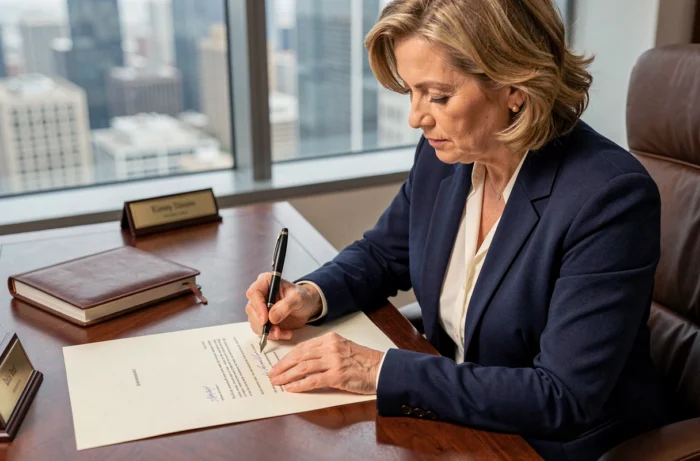
When addressing a manager or director, sobriety works better than effusiveness. The goal is to show respect without falling into banality.
Example: “I wish you an excellent and well-deserved vacation. The team will ensure continuity in your absence, feel free to leave with peace of mind.”
This register is also suitable for professional email. Mentioning the continuity of work reassures unambiguously, and the final phrase reinforces the idea that disconnection is welcome. A message to wish a good vacation is always better when adapted to the hierarchical level of the recipient.
2. The warm word for a close colleague

With a colleague you see daily, a more personal tone is natural. The idea is to acknowledge the bond that goes beyond the strictly professional framework.
Example: “Enjoy your vacation to the fullest, you’ve earned it this year. Come back rested and full of great stories to share at coffee break!”
The reference to a shared moment (the coffee break, a joint project) grounds the message in your actual relationship. A personalized message stands out more than a generic formula.
3. The humorous message to lighten the atmosphere

Humor works well in teams where the tone is already relaxed. Be careful to remain kind: mocking the destination or travel habits may not come across well in writing.
Example: “Have a great vacation! I promise we won’t touch your tea stash. Well, we can’t promise anything if it lasts more than two weeks.”
This type of message is suitable for instant messaging (Slack, Teams) or slipped into a card. Office humor works when it targets a situation, never a person.
4. The collective text signed by the whole team

A collective message has more impact when grouped on a single medium: physical card, unique message on the team channel, or co-signed email. Avoid sending ten individual messages in a row.
Example: “The whole team wishes you a relaxing and sunny vacation. We can’t wait to see you back in great shape in September. Safe travels!”
Add a concrete detail (a nod to a project completed together, an anecdote from the year) so that the message doesn’t feel like a copy-paste.
5. The disconnection-oriented message to encourage rest

Apec 2026 surveys indicate that about one in two executives cannot fully disconnect during their vacation. A message that explicitly encourages digital disconnection is therefore significant.
Example: “Have a wonderful vacation and, above all, forget your inbox. Everything is under control here, truly disconnect.”
This type of wording respects the spirit of the right to disconnect enshrined in the Labor Code. It signals to the colleague that no one expects to see them respond during their vacation.
6. The little note for a colleague going on a long trip

When you know a colleague is going abroad or to a specific destination, mentioning the place shows that you have been listening.
Example: “Japan in August, how lucky! Enjoy every temple and every ramen. Have a great vacation and safe travels.”
Adapting the message to the destination transforms a standard phrase into a personal touch. If you don’t know the colleague’s plans, remain generic rather than assuming.
7. The sober message via professional email

In a context where communication mainly occurs via email, the vacation departure message should remain brief and integrated into an existing exchange (last response on a file, acknowledgment).
Example: “Thank you for this feedback. I wish you a very good vacation. We will resume this file upon your return, enjoy your disconnection.”
Integrating the wish into a work email avoids the isolated message that can seem artificial, especially with a contact you don’t see often.
8. The message for a colleague staying at the office
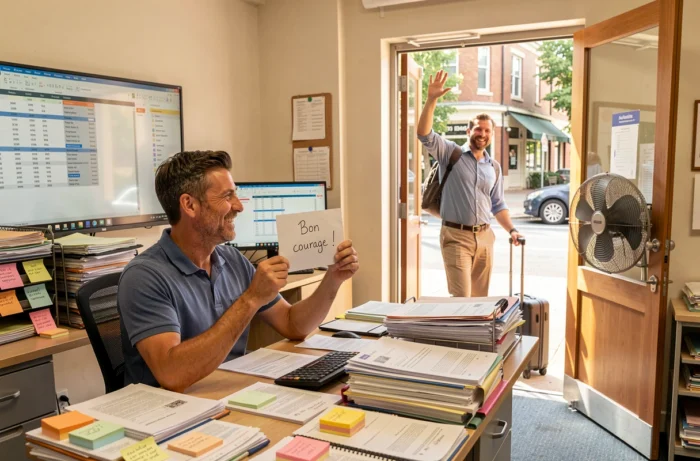
Not everyone leaves at the same time. Wishing a good vacation to someone who stays to work can be awkward if the tone is off.
Example: “I’m leaving for a few days, but I wish you a calm period at the office. Enjoy the quiet to work at your own pace, and your vacation will be all the more appreciated.”
Acknowledging the colleague’s situation (they are staying, they will take their leave later) avoids any mismatch. A departure message is also an opportunity to thank those who ensure continuity.
9. The short text via SMS or instant messaging

On a phone, brevity is key. Two sentences are enough. Long phrases get lost in the conversation thread.
Example: “Have a great vacation! Rest well and come back in shape.”
This format is suitable between colleagues of the same hierarchical level. For a superior, prefer email. SMS or Teams message remains the most spontaneous channel, and it’s precisely this spontaneity that gives it value.
10. The group message on the team channel before the summer holidays

Before a period of closure or widespread vacations (summer, year-end holidays), a unique message on the common channel avoids the multiplication of individual texts.
Example: “Happy summer to the whole team! May everyone enjoy their vacation to unwind. We’ll meet again in September with plenty of energy.”
This format works well when posted on the last working day. A few points to keep in mind for a successful collective message:
- Mention a recent collective achievement to give a positive tone to the departure.
- Avoid listing continuity instructions in the same message: separate the organizational from the convivial.
- Keep a neutral tone about destinations to avoid creating comparisons between those who travel and those who stay.
The choice of register depends on your relationship with the recipient, the channel used, and the team context. A vacation message remains a gesture of professional courtesy, and its value lies more in the attention given than in the length of the text.